One Step at a Time
The steps we’ve created give you a straightforward framework that can be adapted to your skin type, concerns and lifestyle. You may not need to perform every step twice a day, and the products used within each step will vary from person to person. What matters is giving your skin the right support in the right order.
Summer heat, high humidity, strong UV exposure and sudden temperature changes can all leave reactive skin feeling hot, uncomfortable or unusually flushed. Perspiration, swimming, outdoor exercise and moving between intense heat and air-conditioned rooms may also trigger redness in some people.
Here is how the Austin Skin 5 Steps Philosophy can be adjusted to help care for redness- and rosacea-prone skin throughout an Australian summer.
Step 1: CLEANSE
Cleansing removes make-up, sunscreen, excess oil, perspiration and the everyday debris that collects on your skin. BUT … and this is a BIG but … redness-prone skin does not need to be scrubbed into submission. If your face feels tight or squeaky after cleansing, the product you’re using may be doing too much of a good thing.
Instead, choose a gentle cleanser and use cool or lukewarm rather than hot water. A cold shower may be tempting after a sweltering Balgowlah day, but very cold water can also be a shock to reactive skin. Aim for a comfortable temperature that cleanses without adding another potential trigger.
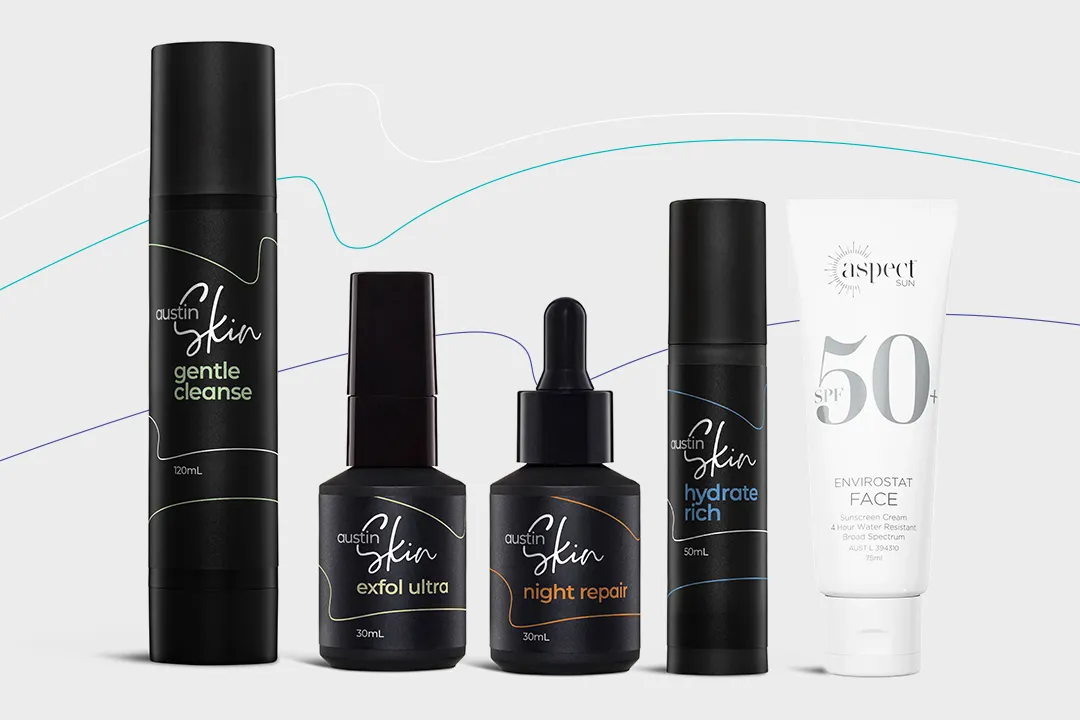
Austin Skin Gentle Cleanse is designed to soften and cleanse while leaving the skin feeling supple. Apply one or two pumps to wet skin, leave it on briefly and rinse without aggressive rubbing. Pat, rather than scrub, your face dry with a soft towel.
During summer, an evening cleanse is particularly important for removing sunscreen, perspiration and pollutants. After swimming or exercising, gently rinse or cleanse the skin rather than allowing chlorine, salt water or sweat to sit on your face for hours. Your routine should suit your skin, not somebody else’s social-media schedule.
Step 2: EXFOLIATE
Exfoliation helps remove dead surface cells and encourages a smoother, fresher-looking complexion. It can also help the products applied afterwards work more effectively.
The important word for rosacea-prone skin is carefully. Exfoliation should never mean attacking the face with a rough scrub. Reactive skin generally responds better to controlled use of an appropriate exfoliating product – and it may not need exfoliation every day. More is definitely not always more.
Austin Skin Exfol contains a blend of exfoliating acids and is designed for nighttime use. Because rosacea and sensitivity can vary considerably, frequency should be personalised. Some people may tolerate occasional use, while those experiencing an active flare, sunburn or a compromised skin barrier may need to pause exfoliation altogether.
“Introduce any exfoliating product gradually. Be particularly cautious during summer, when heat, UV exposure, swimming and frequent cleansing may already be placing extra demands on the skin,” says Dr Austin. “If your skin stings, burns or becomes persistently red, stop and call our clinic.”
Step 3: TREAT
This is where the routine becomes specific to you. The treatment step targets your primary concern, whether that is breakouts, uneven tone, fine lines, dehydration or, in this case, redness and rosacea.
For reactive skin, treatment should be about calming and supporting – not overwhelming the complexion with every active ingredient currently enjoying its fifteen minutes of internet fame.
Austin Skin Redness Relief is included in the Blush Less Kit as the concern-focused part of the routine. The kit is formulated around a blend of antioxidants, peptides and botanicals chosen to help soothe the skin, reduce the appearance of redness and restore balance.
This stage is also where patience matters. Skincare works best when it is used consistently over time. Constantly changing products makes it difficult to identify what is helping and what may be causing irritation. Give a suitable routine time to do its job – and resist the temptation to add three new serums just because they appeared in your feed before breakfast.
Step 4: HYDRATE
Summer skin still needs hydration. Heat, perspiration, air conditioning, swimming and repeated cleansing can all affect the skin barrier. When that barrier becomes dry or compromised, sensitive skin may feel tight, rough, itchy or more reactive than usual.
Hydration helps replenish moisture and supports the barrier that keeps moisture in and irritants out. Helpful ingredients for redness-prone skin can include hyaluronic acid, niacinamide, panthenol and other soothing, barrier-supportive ingredients.
Austin Skin Calm & Protect contains niacinamide, zinc, hyaluronic acid and vitamin B5. It is designed to hydrate and calm inflamed, sensitive or redness-prone skin. It is applied to clean, dry skin before moisturiser and sunscreen.
A well-hydrated complexion is generally a more comfortable complexion. During hot, humid weather, you may prefer lighter layers rather than a heavy moisturiser. If air conditioning, swimming or time outdoors leaves your skin feeling dry, you may need an extra layer of hydration. Apply products gently and allow each layer a moment to settle.
Step 5: PROTECT
Protection is especially important during an Australian summer. UV exposure can contribute to skin damage and may trigger or worsen flushing and redness in some people with rosacea.
Sunscreen should therefore be the final step in your morning skincare routine – whether you’re heading to the beach, sitting beside a sunny window or simply ducking out for coffee.
Use a broad-spectrum sunscreen that suits sensitive skin and apply it generously to the face, ears, neck and other exposed areas. Reapply regularly, particularly after swimming, perspiring or towel-drying. A broad-brimmed hat, sunglasses, shade and lightweight protective clothing provide additional defence.
Whenever possible, plan outdoor activities for earlier in the morning or later in the afternoon, when the heat and UV levels may be less intense. Remember that sand, water and other reflective surfaces can increase your exposure.
Protection also extends beyond sunscreen. Notice your personal rosacea triggers, which might include hot weather, direct sunlight, strenuous exercise, spicy food, alcohol, stress or moving suddenly from outdoor heat into strong air conditioning. You do not necessarily need to avoid everything forever; the aim is to understand what makes your own skin react.
5 Steps in One Easy Kit
The Austin Skin Blush Less Kit is a useful example of how our 5-step philosophy can be tailored to one concern. It contains five products – Gentle Cleanse, Exfol, Antiox Daily Defence, Calm & Protect and Redness Relief – selected for sensitive, redness- and rosacea-prone complexions.
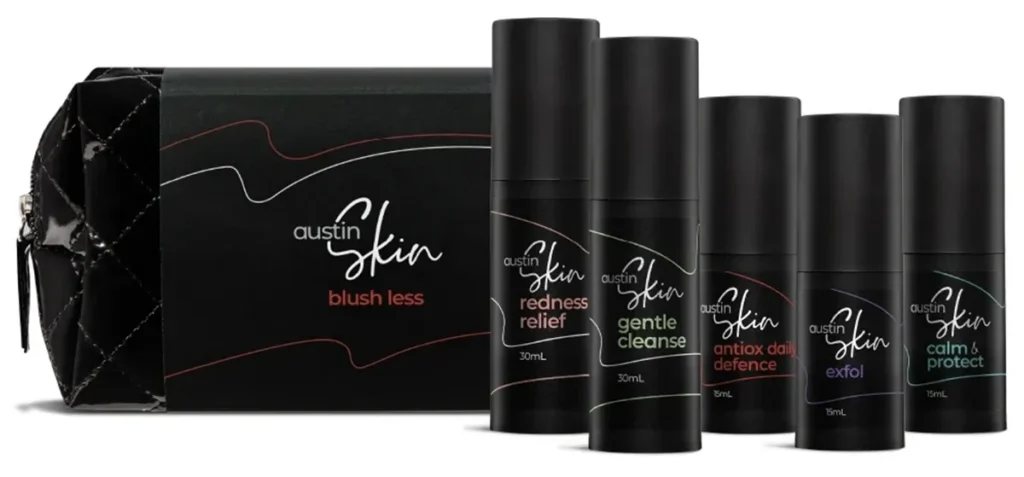
Rather than assembling a routine through trial and error, the kit provides a coordinated place to begin. It is particularly convenient if you are new to active skincare, want travel-friendly sizes for a summer holiday or would like to try the products before moving to full-sized versions.
However, rosacea is a medical skin condition, not simply a rosy complexion. Persistent redness, visible blood vessels, bumps, irritation or eye symptoms should be assessed by a doctor. Anyone with highly reactive skin should also seek advice before introducing active ingredients or changing several products at once.
The beauty of the Austin Skin 5 Steps Philosophy is that it brings order to skincare without making it rigid.
- Cleanse gently.
- Exfoliate appropriately.
- Treat the concern that matters to you.
- Restore hydration.
- Protect your progress.
Five purposeful steps, chosen for your skin, will usually achieve far more than a shelf full of products with no clear plan. And this summer, that calmer approach may be exactly what a hot, flushed and sensitive complexion needs.
Ready to take the guesswork out of caring for redness-prone skin?